MonacoAVC

Monaco AVC - L'organisation officielle des patients d'un AVC à Monaco

Le saviez-vous ? Environ une personne sur quatre sera victime d’un AVC au cours de sa vie. Notre vision : un monde où chacun vit sans les conséquences d’un AVC. Rejoignez-nous !


Bonjour de Monaco! 

An AVC peut changer votre vie. Moi, personellement, j'ai fait deux AVC, et j'ai la chance à dire que je suis en forme. 
La réhabilitation peut etre longue, mais c'est plus facile si on partage notre progrès avec les autres patients. Je partage ici qc photos de mon parcours depuis 2019. 

L'Association MonacoAVC (Accident Vasculaire Cérébrale), nait de mon experience personelle, mais MonacoAVC a aussi besoin de votre donation, et contribution, en plus du partage et de l'engagement des patients d'AVC, leurs familles, et des professionels de la santé.  

Notre vision est une monde libre des effets d'AVC, et ca nous motive de continuer à informer sur les préventions, la réhabilitation et le support des patients à Monaco.

On a besoin de votre support pour que l'association peut continuer son travail. Monaco AVC me tiens au coeur, et chaque contribution de votre part peut faire un différence!

Steven Saltzman
Président Monaco AVC


  • Monte-Carlo, Monaco-Ville, Monaco
  • Villa Inzernia Escalier Inzernia

L'adhésion à l'association MonacoAVC est ouverte aux citoyens, résidents et habitués de Monaco, engagés à soutenir MonacoAVC et son action essentielle. Ensemble, nous pouvons éduquer, inspirer et mobiliser la communauté pour agir pour un monde meilleur. Notre cotisation est de seulement 100 €. Rejoignez-nous !


J'ai un AVC - que dois-je faire ?

Appelez immédiatement les services d'urgence ! N'attendez pas !
Appelez le 112
Vous pouvez appeler le 112 depuis n'importe quel téléphone portable européen et depuis n'importe quel téléphone à Monaco.
Vous pouvez utiliser le bouton d'appel d'urgence.
Le centre anti-AVC le plus proche de Monaco est le CHU de Nice

Hôpital Pasteur - Hôpital Pasteur, 30 Voie Romaine, 06000 Nice (France)
Tél : +33 4 92 03 77 77

Quels types d'AVC existent ?

  1. Accident vasculaire cérébral ischémiques, qui sont causés par un blocage coupant l'apport sanguin au cerveau. (Ces accidents vasculaires cérébraux sont les plus courants).
  2. Accident vasculaire cérébral hémorragique, qui sont causés par un saignement dans ou autour du cerveau.
  3. AIT - Accidents ischémiques transitoires, également connus sous le nom de mini-AVC. Un AIT est identique à un AVC, sauf que les symptômes ne durent que peu de temps. Cela est dû au fait que le blocage qui empêche le sang d'atteindre votre cerveau est temporaire. Il est de la plus haute importance de les reconnaître et de se faire soigner, car il existe un risque élevé de subir un AVC classique par la suite.
https://www.stroke.org.uk/what-is-stroke/types-of-stroke

Comment reconnaître un accident vasculaire cérébral avec le test FAST ?

  • Visage tombant
    • La personne peut-elle sourire ?
    • L'œil ou la bouche sont-ils tombés ou avaient-ils une apparence différente ?
  • Faiblesse des bras
    • La personne peut-elle lever les deux bras ? Bouger les jambes, les mains, les pieds ?
    • Une faiblesse ou un engourdissement soudain du corps est un signe d’accident vasculaire cérébral
  • troubles de la parole
    • La personne peut-elle parler clairement ? Et vous comprenez ce que vous dites ?
    • Des difficultés à parler ou « l'absence de mots » est un signe d'AVC
  • Il esttemps d'appeler les urgences 112.
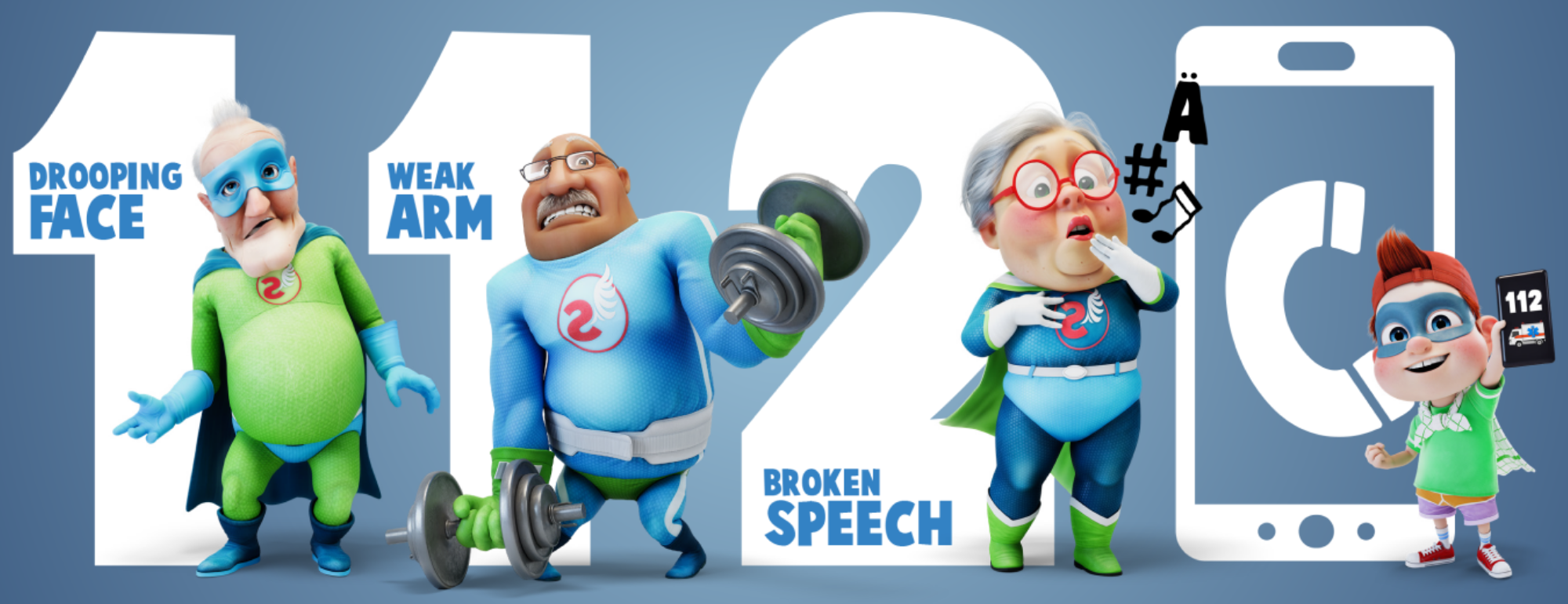
Un AVC est une urgence médicale !

Pouvez-vous vous remettre après un accident vasculaire cérébral?

Tous les patients ont une histoire différente, et tous les AVC sont différents.
Certains peuvent présenter des effets relativement mineurs et de courte durée. D'autres peuvent souffrir de problèmes plus graves, nécessiter une thérapie à court ou à long terme, ou même conserver des handicaps qui les rendent dépendants d'autrui.
Malheureusement, certains AVC peuvent être très graves et certains peuvent entraîner un coma ou une mort subite. C'est pourquoi il est si important de pouvoir reconnaître les symptômes et d'obtenir une aide médicale le plus rapidement possible.
Plus vite vous recevez un traitement, meilleures sont vos chances de bien vous rétablir.


En savoir plus : https://www.stroke.org.uk/what-is-stroke/types-of-stroke

Qu'est-ce qui cause l'AVC ?

Lorsque l’apport sanguin à une partie du cerveau est bloqué ou réduit, un accident vasculaire cérébral ischémique se produit.
Lorsqu’un vaisseau sanguin du cerveau fuit ou éclate et provoque un saignement dans le cerveau, un accident vasculaire cérébral hémorragique se produit.
Un accident vasculaire cérébral est une urgence médicale. Obtenez rapidement une aide médicale !

https://www.mayoclinic.org/diseases-conditions/AVC/symptoms-causes/syc-20350113

À quel endroit du cerveau se produit l’AVC ?

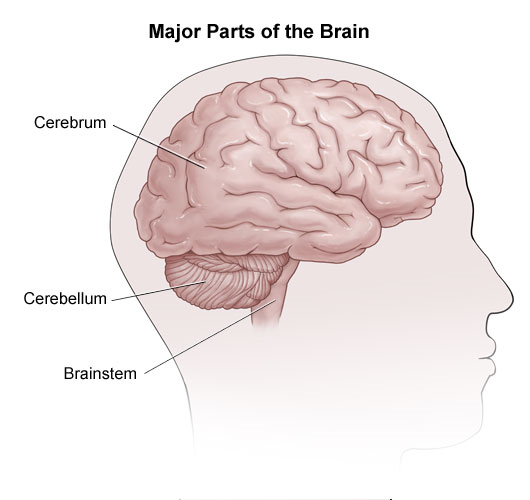
Le cerveau est divisé en trois zones principales. Selon la localisation de l'AVC, ses effets peuvent varier, chaque patient étant différent. Les principales zones cérébrales sont :
  • Cerveau (côtés droit et gauche ou hémisphères)
  • Cervelet (partie supérieure et avant du cerveau)
  • Tronc cérébral (base du cerveau)
Le meilleur article pour une lecture plus approfondie :
https://www.hopkinsmedicine.org/health/conditions-and-diseases/stroke/effects-of-stroke

Quels sont les effets d’un accident vasculaire cérébral ?

Effects may be:

  • Difficulty with movement or paralysis 
  • Sensory and physical impairments, or inability to localize or recognize body parts
  • Problems with coordination and balance (ataxia)
  • Chewing, swallowing, speech and language
  • Eating and swallowing, bowel and bladder control  
  • Memory and Cognitive issues (thinking, reasoning, judgment), inability to find objects, or locations
  • Headache, Dizziness, Nausea and vomiting
  • Visual problems, and spatial problems with depth perception or directions
  • Emotional and behavioral changes, such as lack of concern about situations, impulsivity, inappropriateness, depression, or denial ("neglect")   
  • Sexual ability
  • Breathing and heart functions
  • Body temperature control
https://www.hopkinsmedicine.org/health/conditions-and-diseases/stroke/effects-of-stroke

Comment puis-je prévenir un AVC?

Avec l'âge, et nous vieillissons tous, certaines conditions médicales peuvent augmenter votre risque d'AVC. Les faire vérifier et éventuellement adapter votre mode de vie peut vous aider à prévenir un AVC :
  • L'hypertension artérielle est le principal facteur de risque d'AVC. Vérifiez régulièrement votre tension artérielle
  • La fibrillation auriculaire peut entraîner la formation d'un caillot dans votre cœur, provoquant un accident vasculaire cérébral. Si vous ressentez une arythmie cardiaque, parlez-en à votre médecin.
  • L'hypercholestérolémie et le diabète sont d'autres facteurs de risque.
Des facteurs liés au mode de vie comme le tabagisme, l'alcool, le surpoids et la consommation d'aliments malsains peuvent endommager vos vaisseaux sanguins, augmenter votre tension artérielle et rendre votre sang plus susceptible de coaguler.
Vérifiez également vos antécédents familiaux, si un parent proche (parent, grand-parent, frère ou sœur) a eu un accident vasculaire cérébral. Parlez à votre médecin généraliste si vous avez des proches qui ont subi un accident vasculaire cérébral ou une crise cardiaque, car certains types d'hypercholestérolémie peuvent être héréditaires.

Facteurs de risque d’accident vasculaire cérébral

Risk Factors that you can control account for 82% to 90% of all strokes:
  • High blood pressure
  • Obesity / Physical inactivity
  • Poor diet / Diabetes / High Blood Cholestorol
  • Smoking
Some risk factors are specific to one type of stroke: Blood clots can arise from coronary heart disease, atrial fibrillation, heart valve disease, and carotid artery disease. Bleeding can occur after taking blood thinners.

Further risk factors are based on lifestyle, genetic , and environment.
  • Age is a risk factor, too. A stroke can occur at any age, but the risk is higher for babies under the age of 1 and for adults as they grow older.
  • Anxiety, depression, and high stress levels, as well as working long hours and not having much contact with family, friends, or others outside the home, may raise your risk for stroke.
  • Family history and genetic play a role as well. Your risk of having a stroke is higher if a parent or other family member has had a stroke, particularly at a younger age. Certain genes affect your stroke risk, including those that determine your blood type. People with blood type AB (which is not common) have a higher risk.
  • Living or working in areas with air pollution can also contribute to stroke risk.
  • Other medical conditions, such as sleep apnea, kidney disease, and migraine headaches, are also factors.
  • Other unhealthy lifestyle habits, including drinking too much alcohol, getting too much sleep (more than 9 hours), and using illegal drugs such as cocaine, may raise stroke risk.
  • Sex can play a role in risk for stroke. At younger ages, men are more likely than women to have a stroke. But women tend to live longer, so their lifetime risk of having a stroke is higher. Women who take birth control pills or use hormone replacement therapy are at higher risk. Women are also at higher risk during pregnancy and in the weeks after giving birth. High blood pressure during pregnancy — such as from preeclampsia — raises the risk of stroke later in life.
  • Viral infections or conditions, such as lupus or rheumatoid arthritis, can cause inflammation.
https://www.nhlbi.nih.gov/health/stroke/causes

Je suis sorti de l'hôpital - ET MAINTENANT ?

If you are in recovery after your stroke, strength and dedication are how you will defeat stroke. 

Rehabilitation is the key to recovery post-stroke, and the right program can help you to regain independence.

As MonacoAVC, we can only provide you with Tips and Strategies for moving forward, as well as the Monaco community of other stroke survivors, who will understand you, be there for you and happy to exchange on your experience. 

After your stroke, you may have to relearn or reconfigure the most basic things in life: dressing, driving, shopping, to name a few. These tips and strategies can help you recover and chart your new course, and you will find them here in our FAQ section.

Managing Your Stroke
Tips for Daily Living
Exercise
Home Modifications
Return to Work 

Rehabilitation is important, as the rehabilitation and support a survivor receives can greatly influence health outcomes and recovery. Stroke affects so many different functions — paralysis and weakness; gross motor skills; fine motor skills; speech and language; cognition; vision; and emotions. How appropriate, quality rehabilitation with a strong team specially trained to meet your needs improves the chances for the best possible recovery. 

Once you are discharged from the hospital, you will have received a plan for your rehabilitation. Reach out to your doctor and hospital if you haven't got further information, and ask for a rehabilitation as well as a post-stroke follow-up plan. 

Quelles sont les thérapies disponibles pour le traitement post-AVC ?

Therapy will depend on each patient's situation, and the rehabilitation plan will change during the recovery process, depending on which part(s) of the body or abilities were affected and the type and severity of damage.

However let's have a look at certain stroke rehabilitation therapies and the variety of specialists involved:

1. Physical Therapy


Physical Therapy includes a variety of muscle maneuvers, activities and exercises designed to train the brain and the muscles to work together.  
It uses an approach that builds muscle strength and maintains healthy muscle tone. Nearly any 30-60 min 5-7 days/week physical therapy is effective to improve your mobility, walk at a faster pace, function more independently, and have a better balance, and is usually already initiated in the hospital, shortly after the stroke.
Your physical therapist should be specialized in treating disabilities related to motor and sensory impairments, and be able to help restore physical functioning by evaluating and treating problems with movement, balance, and coordination; and constraint-induced therapy, in which an unaffected limb is immobilized, causing the person to use the affected limb to regain movement and function, but also independence, and quality of life.

2. Occupational Therapy is a more task-focused type of training, and therapists work with stroke survivors on practical, real-world, day-to-day tasks such as getting in and out of bed and dressed, eating & drinking, and general walking and climbing of stairs. Occupational therapists also help to improve sensory abilities while ensuring safety in the post-stroke period, such as for personal grooming, preparing meals, and housecleaning.

3. Speech and Swallow Therapy will support you in getting
those skills back, as they require thinking about the action while coordinating muscles of the face, mouth, tongue, and throat. Speech-language pathologists help a person relearn how to use language or develop alternative means of communication, and they also might teach problem-solving and social skills needed to cope with those aftereffects of a stroke. Speech therapy can be focused on understanding words as well as on producing words that others can clearly understand, and usually involves longer practice and repetition. Swallowing problems are usually more of an unpleasant surprise, but can be life threatening, and therapie to improve swallowing starts typically directly in the hospital, eventually by learning the "chin-tuck maneuver" : https://www.ncbi.nlm.nih.gov/pmc/articles/PMC4687995/

4. Visual Therapy and balance therapy are often scheduled in combined rehabilitation sessions for stroke survivors, because vision partially relies on good balance and balance partially relies on good vision, and the areas of the brain that control these two functions have to interact.

5. Cognitive Therapy involves interventions that are designed to improve thinking skills and problem-solving abilities, such as using computer-generated and video-game rehabilitation therapy. Stroke survivors who participate in cognitive therapy recover better than stroke survivors who do not. Stroke survivors recovering from a cortical stroke often have more cognitive issues than after recovering from a small vessel subcortical stroke, and left-sided cortical strokes cause different cognitive deficits than right-sided ones.

6. Innovative Physical & New Types of Therapy are including mirror therapy, and electrical therapy, biological therapy, and alternative medicine includes treatments such as massage, yoga, meditation, herbal therapy, acupuncture, music and oxygen therapy. New therapies include Noninvasive brain stimulation, and techniques such as transcranial magnetic stimulation which have been used with some success in a research setting to help improve a variety of motor skills. Biological therapies, such as stem cells, are being investigated, but should only be used as part of a clinical trial. , where results are being evaluated. Research studies show that the use of new and innovative rehabilitative therapies tend to test better on measures of stroke outcomes and usually do not experience negative effects.

7. Psychatrical and Psychological Therapy: Psychologists, and Psychatrists can help with the person’s mental and emotional health and assess cognitive skills, as well as support stress, e.g. with EDMR.

8. Doctors, Physicians & Nurses: Your doctors have the primary responsibility for managing and coordinating the long-term care of you as a stroke survivor, including recommending which rehabilitation programs will best address your individual needs. However, with our experience we like to encourage you to take an active part in this. Doctors supporting often include physiatrists (specialists in physical medicine and rehabilitation), neurologists, internists, geriatricians (specialists in seniors), and family practice physicians. A physician also may recommend medicines to ease pain or treat a condition. Specialized rehabilitation nurses can help a stroke victim relearn the skills needed to carry out the basic activities of daily living. They also provide information about routine health care, such as how to follow a medication schedule, how to care for the skin and manage bladder and bowel issues, how to move out of a bed and into a wheelchair, and special needs for people with diabetes.

9. Return to Work: Vocational Therapists, especially after Aphasia, and speech therapy may further support to sharpen your ability for conversations. Job Consultants could support in career counsel, and in helping you in case of residual disabilities to identify vocational strengths and develop résumés that highlight those strengths. They also can help to identify potential employers, assist in specific job searches, and provide referrals to vocational rehabilitation agencies. Usually they work hand in hand with social workers, who can assist with making financial decisions and plan the return home or to a new living place. They also can help plan for care after being discharged from a rehabilitation facility. 

https://www.mayoclinic.org/diseases-conditions/stroke/in-depth/stroke-rehabilitation/art-20045172

https://www.ninds.nih.gov/Disorders/Patient-Caregiver-Education/Fact-Sheets/Post-Stroke-Rehabilitation-Fact-Sheet#whatis

https://www.youtube.com/watch?v=2lMtwbj5TTc

Exercises et Thérapie

Regular physical activity is one of the best things you can do while recovering from stroke. 

Following a stroke, it’s important to reduce sedentary time and start being as physically active as possible, even if you need assistance from others. Engaging in regular physical activity will help you improve and return to the fullest possible level of function.

The benefits of physical activity on stroke recovery are extensive and may include:
- Improved overall stroke recovery
- Improved physical function (mobility, walking, balance)
- Improved mental function (mood, depression)
- Reduced risk of stroke recurrence
- Reduced risk of heart-related conditions (for example, by reducing blood pressure, obesity)
- Reduced risk of falls

Develop healthier habits for life: Start small and increase the amount and intensity of physical activity and exercise to build endurance and strength

Your physical therapist should be specialized in treating disabilities related to stroke, and should know about the emotional and mental burden on stroke survivors.

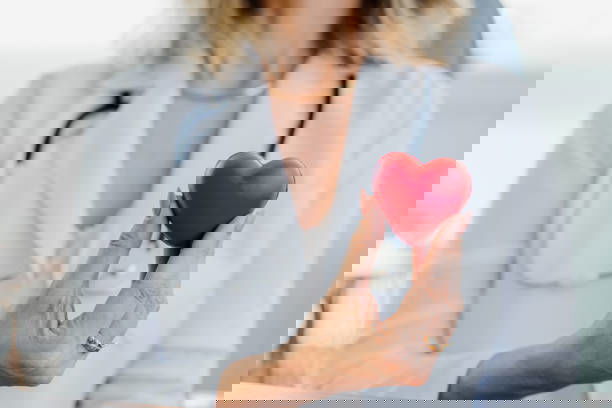
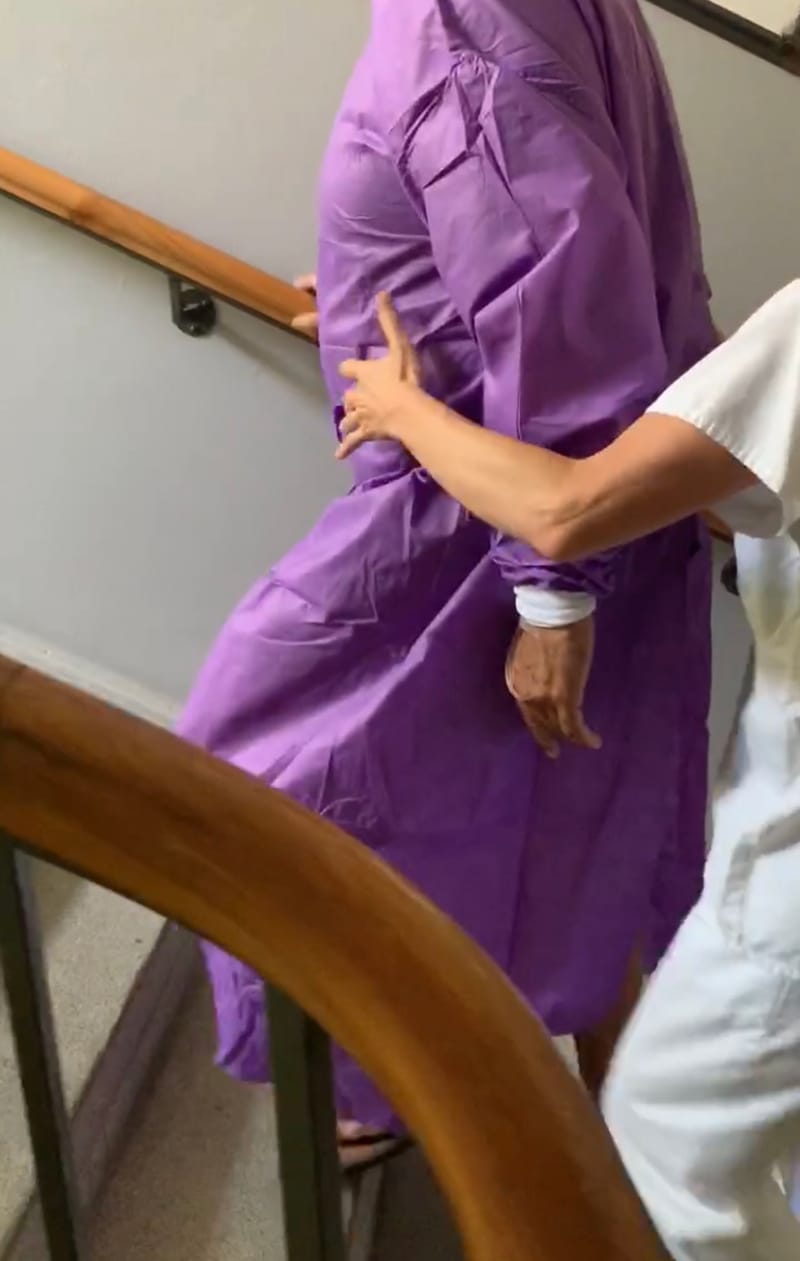
The picture on the HOME screen showing our MonacoAVC president during his Rehabilitation. Courtesy to Steven Saltzman, President MonacoAVC.

Quels conseils donneriez-vous pour la vie quotidienne ?

After a stroke everyday tasks may become more challenging.

The American Stroke Association has created a couple of "how-to" Videos in English with tips for dressing, bathing, bed making, laundry, shopping, time-saving suggestions and ideas for assistive devices to make tasks simpler, but also neccessary tips like "bed to wheelchair" transfer, and basic grooming. 

Be open to learn again, like Children want to learn everything. Don't be too proud to ask, others have been through the same, like we have. (Shoe laces can be a challenge, too, so look for slip-in shoes!)

A stroke is a life-changing event — physically and emotionally. 

It can make everyday activities challenging. These challenges may be due to several stroke-related conditions, such as limb weakness, numbness or paralysis, communication challenges, vision challenges and one-side neglect challenges. Getting dressed, making a meal, doing laundry, or staying organized for the week may become big obstacles. Simple everyday tasks may need to be relearned and you may need more frequent rest breaks. Every stroke is unique, and your recovery will be too.

MonacoAVC members had to physically learn their jobs again, we are ready to help boosting your motivation!  

https://www.stroke.org/en/life-after-stroke/recovery/daily-living

J'aurai besoin d'une modification de mon domicile - quels sont vos conseils ?

If you are dealing with mobility and balance issues after your stroke, modifications around your house can ensure your return is comfortable.

What is important to know: Prevent yourself from falling!
You may not think about moving around safely and easily in your home — until you have a stroke.

Up to 70% of stroke survivors fall during the first six months after discharge from a hospital or rehabilitation facility. 
Also, 30% to 80% of stroke survivors report various levels of fear associated with falling and mobility.

The good news is you can take steps to make your home safer. First, find out where you stand with a home safety evaluation, which a social worker can do. This will include reviewing your needs and determining the home modifications that will help meet them. A case manager will work with you and your caregivers to purchase and install any necessary equipment. This could include assistive devices, ramps and grab bars, especially in bathrooms and showers.

An evaluation of your home will help you to assess your needs, preferences and abilities as well as the existing features of your home. Consider how your stroke has affected your abilities and other health conditions to identify modifications that will work now and in the future. Ask about your routine and habits. 
Consider the needs of the whole family. 

Work with a professional to ensure that the modifications fit your needs and those of the whole family. 

For further reading, we share links to the American Stroke Association, a great source of wisdom for a wide range of topics around stroke, see below: 
Bathroom:
https://www.stroke.org/en/life-after-stroke/recovery/home-modifications/modify-the-bathroom-to-match-your-abilities
Kitchen:
https://www.stroke.org/en/life-after-stroke/recovery/home-modifications/starting-a-kitchen-remodel
Bedroom:
https://www.stroke.org/en/life-after-stroke/recovery/home-modifications/modify-the-bedroom-to-match-your-abilities


On m'a diagnostiqué une aphasie. Que dois-je faire ?

Aphasia is a language disorder that affects a person’s ability to speak, understand, read, or write. It often occurs after a stroke or brain injury, but can also result from other neurological conditions.

Depending on which brain areas are affected, aphasia can range from mild to severe.

Recovery is possible, and speech therapy can help at any stage. People with aphasia often describe it as a barrier to fully participating in life, leading to
frustration or loss of confidence.

Speech therapy focuses on building practical
strategies that support clearer, more effective
communication and greater independence. guide highlights common adult communication

Start getting professional help immediately after being discharged from hospital. But even later, a professional speech therapist will be able to help you improving. Your doctor will provide you with the necessary prescription.

Monaco’s health portal provides an overview on the speech therapist “Orthophonists” available.

https://www.monacosante.mc/fr/
Home —> Care offer —> Research—>
search for “Speech Therapist” or “Orthophonist”

Find more information about Aphasia in English and French here:
https://www.stroke.org.uk/stroke/effects/aphasia/types-of-aphasia
https://aphasie.fr/l-aphasie/ce-quest-laphasie/

Quels sont les frais d'adhésion à MonacoAVC ?

L'adhésion est ouverte aux citoyens, résidents et habitués de Monaco. La cotisation régulière est de 100 euros pour les membres actifs. Les praticiens de santé de Monaco, ainsi que les médecins, sont les bienvenus en tant que membres associés non payants et sans droit de vote.
Monaco AVC avocats pour les patients atteints d'AVC, l'information et la réadaptation. Nous sommes membres de la World Stroke Association et soutenons les échanges au-delà des frontières de Monaco. Notre équipe travaille entièrement bénévolement. Contactez-nous pour en savoir plus sur nos objectifs de cette année, notre feuille de route et consultez notre page ÉVÉNEMENTS pour plus d'informations sur nos réunions.
Vos dons pour notre cause sont les bienvenus.

Your contribution is important to us, please support us with your engagement. The annual membership fee of 100€ enables us to run the association for the stroke survivors. Please fill out the membership form below. Payments are possible via paypal, cheque, or bank transfer. Monaco doctors, therapists & health practitioners are welcome to support our organization which we honour with a free membership. 


Cet aperçu n'est pas exhaustif. Veuillez demander conseil à votre praticien en fonction de votre situation.
Ergothérapie

Ergothérapie

L'ergothérapie est un type de formation davantage axé sur les tâches, et les thérapeutes travaillent avec les survivants d'un AVC sur des tâches quotidiennes pratiques et réelles telles que se lever et se lever du lit et s'habiller, manger et boire, marcher et se lever en général, ainsi que montée des escaliers. Cela commence généralement directement à l’hôpital le jour 2 ou 3.

En savoir plus
Thérapie de la parole et de la déglutition

Thérapie de la parole et de la déglutition

L'orthophonie et la déglutition vous aideront à retrouver ces compétences, car la déglutition est tout aussi importante pour respirer, tousser, parler que pour boire et manger.

En savoir plus
Thérapie visuelle et de l'équilibre

Thérapie visuelle et de l'équilibre

La thérapie visuelle et la thérapie de l'équilibre sont souvent programmées dans des séances de rééducation combinées pour les survivants d'un AVC, car la vision repose en partie sur un bon équilibre et l'équilibre repose en partie sur une bonne vision, et les zones du cerveau qui contrôlent ces deux fonctions doivent interagir.

En savoir plus
Thérapie cognitive

Thérapie cognitive

La thérapie cognitive implique des interventions conçues pour améliorer les capacités de réflexion et les capacités de résolution de problèmes.

En savoir plus
Yoga & Meditation

Yoga & Meditation

Le yoga et la méditation peuvent contribuer à la prévention et à la réadaptation des AVC en améliorant les fonctions physiques comme l'équilibre et la force, en stimulant les capacités cognitives et en réduisant le stress. Ils sont particulièrement efficaces en complément thérapeutique, contribuant à améliorer la neuroplasticité, c'est-à-dire la capacité du cerveau à s'adapter et à former de nouvelles connexions après un AVC. Parmi les bienfaits spécifiques, on compte une amélioration de la mobilité, de la souplesse, de la circulation et un plus grand sentiment d'autonomie pour les personnes ayant survécu à un AVC.

Article : 5 bienfaits du yoga
Thérapie au DMSO diméthylsulfoxyde

Thérapie au DMSO diméthylsulfoxyde

Une nouvelle thérapie alternative offre des résultats prometteurs grâce à des machines permettant d'inverser les AVC. Elle peut durer environ un mois, à raison d'une à deux heures par jour, pour un traitement coûteux d'environ 300 £ par séance. Actuellement proposée dans deux cliniques britanniques (Battersea et Optimal Health), elle ne fait l'objet d'aucune recommandation en tant qu'association. Nous informons uniquement sur les informations disponibles publiquement. Veuillez consulter votre praticien à ce sujet.

Article : Informations sur la thérapie au DMSO
Autres formes de thérapie dans la réadaptation post-AVC

Autres formes de thérapie dans la réadaptation post-AVC

De nouveaux types de thérapies évoluent, comme la physiothérapie innovante, l'EMDR, la thérapie par le miroir, la thérapie électrique, les chiens de thérapie et la musicothérapie.

Traitement Micro Ostéo Numérique

Traitement Micro Ostéo Numérique

La Micro-Ostéo Digitale est une méthode thérapeutique manuelle non manipulatrice. Initiée par le Docteur Maurice Poyet en France vers la fin des années 70, elle est un mélange entre la thérapie énergétique chinoise et les règles de l'ostéopathie basées sur le Mécanisme Respiratoire Primaire (MRP) ou « souffle de vie ». https://microosteo.fr/ https://seednurture.com/fr/ https://classic.clinicaltrials.gov/ct2/show/NCT04845269 Disponible à Menton, Côte d'Azur : Philippe Bagnol +33 6 19 76 20 59 Adresse : Espace Néona 32, Rue de la République, 06500 Menton

Fragile Suisse

Fragile Suisse

FRAGILE Suisse est l'association suisse de patients pour les victimes d'AVC et leurs proches et nous a personnellement soutenus. Ils proposent une large gamme de services avec onze associations régionales en Suisse : https://www.fragile.ch

En savoir plus

 MonacoAVC is a patient organization committed to supporting individuals through information exchange and community engagement. We do not recommend, endorse, or promote any specific medical treatments, therapies, or healthcare providers. The addresses and contacts shared through our network are based solely on the personal experiences of our members and other Monaco patients. This information is provided for general informational purposes only. We strongly advise all patients to consult their qualified physicians or healthcare professionals before starting or modifying any treatment, therapy, or healthcare program. 

MonacoAVC - AVERTISSEMENT IMPORTANT
 

 Osteopathy is a drug-free, noninvasive manual therapy. It aims to improve overall health across all body systems by manipulating and strengthening the musculoskeletal framework. Neona accompagnies you towards a better balance. 

Espace Néona Micro Ostéothérapie Neona
         

 A very high tech outpatient cardiology clinic, offering prevention, diagnosis, treatment & rehabilitation, in a gentle and efficient way, and in a familiar environment. 

Clinique de Cardiance Clinique ambulatoire de cardiologie en Suisse Clinique de Cardiance